Need Service Today? Contact Us Now!

The Rocklin Homeowner’s Diagnostic: Is Your AC a “Money Pit” or a Candidate for Repair?
Contact Us Today!
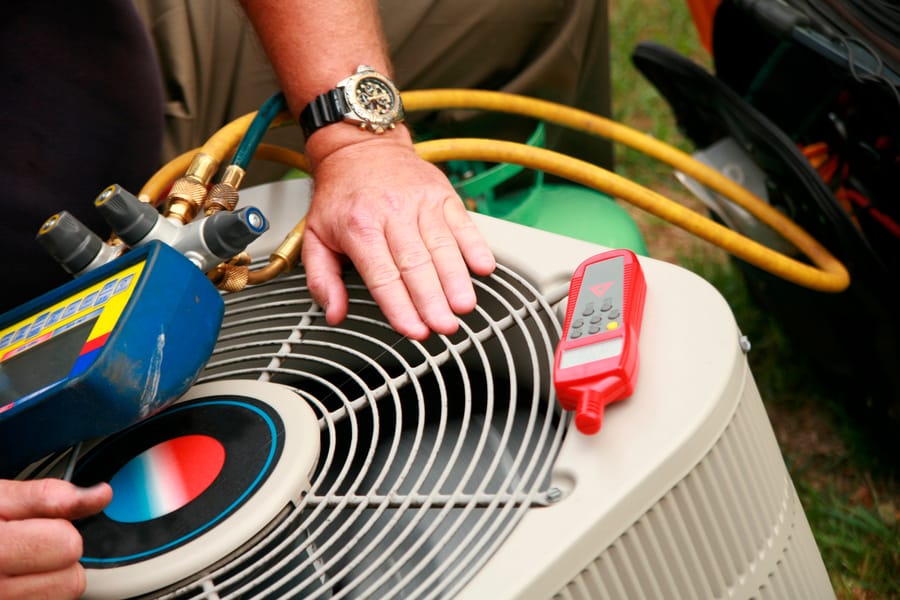
As a homeowner in Rocklin, your air conditioner is easily the most important appliance in your house from May through September. When the temperature starts climbing toward 105°F and your AC begins making a strange noise or struggles to keep the living room cool, a sense of dread usually sets in. You find yourself asking the ultimate question: Should I pay for another repair, or am I just throwing good money after bad?
It is easy to feel like your AC has become a “money pit” when you are calling for service every other year. However, not every breakdown means the system is destined for the scrap heap. The key is knowing how to perform a “diagnostic” on your system’s overall health and financial impact. In our region, where the cooling season is long and intense, an inefficient or unreliable system can cost you more in utility bills and emergency fees than the price of a monthly payment on a new unit.
At Rocklin Heating & Air, we want our neighbors to make informed decisions that protect both their comfort and their bank accounts. In this blog, we will help you determine if your AC is a candidate for a quick fix or if it is time to say goodbye.
The “Repair” Candidate: When to Keep the Unit
Just because your AC has stopped blowing cold air doesn’t mean it’s time for a full replacement. Many common issues are simple, isolated failures that, once fixed, allow the system to run reliably for several more years.
Minor Component Failures
Most air conditioning problems are caused by small parts that are designed to be replaced periodically. If your system is less than 10 years old, these repairs are almost always worth it.
-
Capacitors and Contactors: These are the most common electrical failures. They are relatively inexpensive to replace and are often the reason a system won’t start.
-
Clogged Condensate Lines: If your AC shuts down because of a “float switch” trigger, it is usually just a backup of algae or dust in the drain line. A quick flush restores the system.
-
Blown Fuses or Tripped Breakers: Sometimes the issue is external to the AC unit itself and can be resolved with a simple electrical reset or a minor wiring fix.
Systems Still Under Warranty
If your unit is still covered by a manufacturer’s parts warranty, the decision to repair is usually a “no-brainer.”
-
Parts Coverage: Major components like the compressor or the evaporator coil can be expensive, but if the manufacturer is covering the cost of the part, you only have to worry about the labor.
-
Regular Maintenance History: If you have kept up with annual tune-ups, your system is less likely to have “compounding” issues, making a single repair a safe bet for the future.
The “Money Pit” Candidate: Signs of a Failing System
An air conditioner becomes a money pit when the cost of keeping it running exceeds the value it provides. In Rocklin, where the summer sun is relentless, an old system can become a major financial liability.
The “50% Rule”
A good rule of thumb used by HVAC professionals is the 50% rule. If the cost of a single repair is more than 50% of the value of the entire system, it is time to replace it.
-
Cumulative Costs: Look at your records from the last two years. If you have spent $500 here and $800 there, and you are now looking at another $1,000 repair, you are officially in “money pit” territory.
-
The R-22 Refrigerant Trap: If your system was built before 2010, it likely uses R-22 (Freon). This refrigerant is no longer produced, and the cost to “top off” a system with a leak can be staggering, often costing as much as a major repair.
Performance and Utility Spikes
Sometimes the signs of a money pit aren’t in the repair bills, but in your monthly PG&E statement.
-
Constant Running: If your AC runs all day but the house never gets below 78°F, the system is likely losing its efficiency or is sized incorrectly for your home.
-
Rising Utility Bills: Compare your summer energy bills from three years ago to now. If your usage hasn’t changed but the bill has skyrocketed (beyond standard rate increases), your system is working harder and harder to produce less cooling.
-
Humidity Issues: A failing AC struggles to remove moisture. If your home feels “sticky” or “heavy” even when the air is blowing, the system is no longer performing its primary functions.
The Rocklin Environmental Factor
Our local geography plays a role in how fast your AC ages. Rocklin’s proximity to open fields and the heat-trapping nature of the valley means your system works harder than a unit in a coastal city like San Francisco.
Heat Exposure and Component Stress
In 100-degree weather, the internal temperature of your outdoor condenser unit can climb much higher. This extreme heat causes the chemical structure of the oil in your compressor to break down over time.
-
Micro-Leaks: The constant expansion and contraction of copper coils in the Rocklin heat eventually leads to tiny “pinhole” leaks in the refrigerant lines.
-
Inflexible Wiring: High heat can make electrical insulation brittle. If you open your unit and see “cracked” or charred wires, the system is becoming a fire hazard.
Dust and Debris
Rocklin can be a dusty environment, especially in newer development areas.
-
Coil Erosion: Dust acts as an abrasive. Over a decade, it can wear down the delicate fins on your condenser coils, reducing the system’s ability to “breathe” and dump heat.
-
Motor Strain: If dust gets into the bearings of your blower motor, it increases friction and electrical draw, leading to the “high bill” syndrome.
Making the Right Call for Your Home
Is your AC acting like a money pit, or does it just need a little TLC? At Rocklin Heating & Air, we provide transparent, expert diagnostics to help you make the best choice for your budget and your comfort. We won’t push you into a replacement if a repair makes sense, and we won’t let you waste money on a dying system without giving you the facts.
Contact us today for a system health check and stay comfortable all year long.
