Need Service Today? Contact Us Now!

Summer in the Sacramento Valley is famously intense. When July and August arrive in Rocklin, afternoon temperatures routinely climb into the upper nineties and triple digits, bringing weeks of dry, blistering heat. To keep your family safe and comfortable, your central air conditioner has to work under immense pressure. But if your indoor spaces always feel a little too warm, or your thermostat refuses to drop during the hottest parts of the day, your home might be fighting a hidden installation flaw: an undersized HVAC system.
An undersized air conditioner simply lacks the physical cooling capacity required to manage your home’s total square footage and layout. Many homeowners assume that a warm house always means their equipment is old, broken, or needs a simple refrigerant recharge. While standard wear and tear can certainly slow a system down, an air conditioner that was never large enough from day one will permanently struggle against the Placer County sun. Rocklin Heating & Air has been serving families across our local communities for years with honest, dependable service. This guide breaks down the clear warning signs that your cooling system is too small for your house, and the best ways to solve the issue permanently.
The Core Problem: Why Equipment Capacity Matters
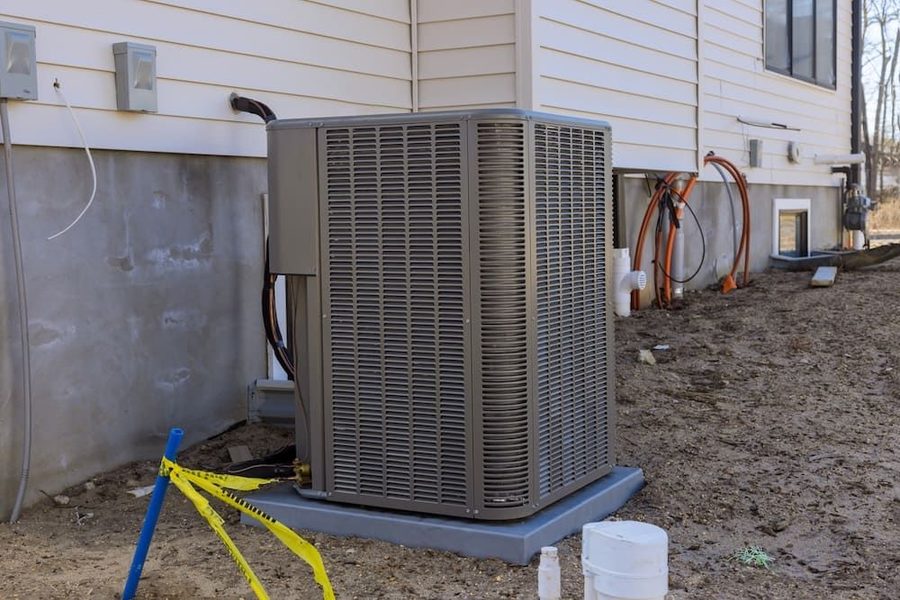
In the heating and cooling world, system size doesn’t refer to the physical dimensions of the outdoor metal box sitting in your side yard. Instead, it refers to the system’s cooling capacity, which is measured in tons or British Thermal Units (BTUs). A certified professional must calculate your home’s unique layout, insulation, and window placement to match it with the perfect equipment capacity.
A properly sized system will run a standard cycle, quickly cool your home down to your target temperature, and shut off to rest. An undersized unit lacks the physical strength to reach that target, creating a continuous loop of operation that wears down components and compromises your comfort.
Clear Warning Signs That Your System Is Undersized
When an air conditioning asset is structurally too small to handle your property volume, it will exhibit a few distinct behavioral patterns during warm weather:
-
The System Runs Continuously Without Stopping: If your air conditioner runs for twenty-four hours straight without ever taking a short cycle break on a hot afternoon, it is actively struggling to keep up with the heat load.
-
The Thermostat Settings Are Never Met: If you set your indoor temperature to seventy-two degrees but the actual room temperature stays stuck at seventy-eight all afternoon, your cooling coils cannot remove heat fast enough.
-
Massive, Sky-High Electric Bills: Because an undersized blower and compressor motor never take a break, they siphon a continuous stream of electricity from your power grid, causing your summer utility bills to skyrocket.
-
Severe Temperature Imbalances Between Rooms: If the rooms closest to your indoor air handler feel cool but your upstairs bedrooms or back hallways feel like a sauna, your system lacks the airflow velocity needed to push conditioned air to the furthest corners of your ductwork.
The Mechanical Toll: How Short-Sizing Destroys Your Hardware
Forcing a small air conditioner to do a giant job introduces heavy mechanical strain across your entire electrical and mechanical grid. Trying to power through a hot Rocklin summer with an undersized unit will quickly lead to permanent hardware failures and expensive emergency repair invoices.
The most common component to fail first is the dual run capacitor. Running a fan motor non-stop generates high internal operational heat, causing the electrical capacitors inside your outdoor service cabinet to swell, pop, and fail under the constant load.
Continuous operation also leads to frozen indoor evaporator coils. When an undersized system runs non-stop, the indoor cooling coils never get a chance to rest or shed moisture. This constant cooling eventually causes the condensation to freeze solid into a block of ice, completely blocking all indoor airflow.
Lastly, the ultimate consequence of an undersized unit is premature compressor burnout. The compressor acts as the heart of your system. Forcing it to run without cycling breaks down internal lubrication shields, leading to a locked rotor and an expensive breakdown that usually requires a complete system replacement.
The Science of Proper Sizing: Moving Past Simple Rules of Thumb
Many outdated builders or cut-rate contractors use a sloppy approach to choose an air conditioner size, simply multiplying the home’s square footage by a generic number. This outdated method is exactly how modern homes end up with undersized or oversized equipment that fails prematurely.
Licensed master technicians rely on advanced building science formulas called a Manual J load calculation to determine the exact cooling tonnage your unique property requires. This formal assessment evaluates:
-
Your Home’s True Insulation Levels: The thickness and material composition of your attic insulation and wall cavities dictate how much heat enters your home.
-
Window Placement and Sun Exposure: Large, west-facing windows allow massive amounts of radiant solar energy into your living spaces, requiring extra cooling power to neutralize the heat.
-
Ceiling Heights and Architectural Volume: A room with vaulted, two-story ceilings contains twice as much air volume as a standard flat ceiling, demanding a more robust air distribution network.
-
Household Occupants and Heat-Generating Appliances: Every human body and electronic device inside your home generates natural ambient heat that must be factored into the total calculation.
Protecting Your Long-Term Comfort and Energy Efficiency
Investing in a home cooling system is a major commitment, and ensuring that the equipment matches the physical scale of your property is the only way to protect your long-term comfort and financial stability. Continuing to run an undersized system through intense Northern California summers is a costly mistake that guarantees sky-high utility bills, ongoing emergency repair invoices, and an uncomfortable home environment for your family. By bringing in a certified professional to run a proper load calculation, you take the guesswork out of property management. Upgrading to a properly sized, high-efficiency cooling network permanently lowers your monthly energy expenses, eliminates summer breakdown anxiety, and ensures your home stays a cool, refreshing sanctuary no matter how high the thermometer climbs.
Turn to Rocklin Heating & Air for Reliable Comfort Solutions
You shouldn’t have to suffer through hot afternoons inside your own home because of an incorrectly sized air conditioner. The friendly, fully licensed team at Rocklin Heating & Air specializes in comprehensive energy audits, advanced Manual J load calculations, and installing high-efficiency cooling networks that are perfectly tuned to survive the Sacramento Valley climate. Let our team evaluate your home’s unique layout and restore your peace of mind before the next major heat wave hits.
Contact us today to get your HVAC service scheduled!